
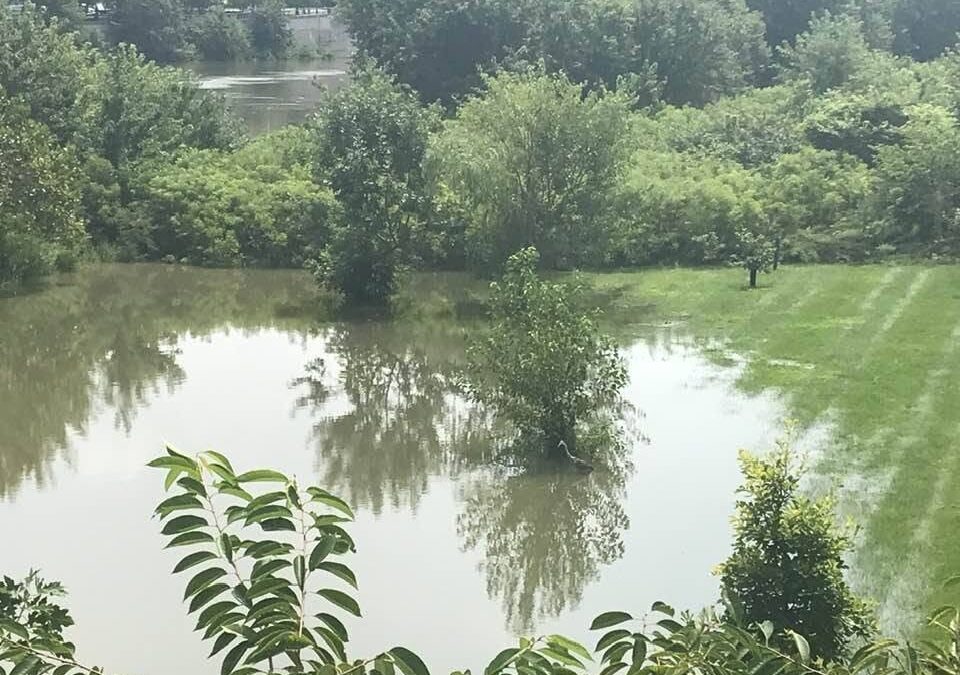
Is Flooding Ruining Your Lawn?
I want to send our thoughts and prayers to everyone devastated by the recent Indiana floods. For far too many, there are much bigger concerns than landscaping and lawns.
Last month, you know, before all the rain, we had Berger Hargis install French Drains in our yard. If you don’t know what French Drains are, read this: What is this French Drain You Speak of?
The bottom line is that French Drains are perforated pipes buried below your lawn that collect and redirect excess water. We had them put in our backyard several years ago. Before the drains, the yard would flood with several inches of water. We had to redirect the flood or plant rice. The new drains are in a side yard that used to stay full of water. The drain also includes all of our downspouts. It. Works. Great!
But What Does Excess Water Do to a Yard?
As we now know, our timing on the drain installation was perfect. However, with so much rain, we still got a lot of water. And the bad news is that flooding can cause long-term damage to your lawns. Especially when water sits on your grass surface for several days. Why, you may ask? It’s simple: the lack of oxygen, light, and nutrients can wreck your yard. Silt swept in by heavy floodwaters doesn’t help either.
The Damage
Root suffocation — Grass roots need oxygen to survive. Flooding drowns your grass, causing root rot and more.
Too hot – You know how cold rain and snow damage grass. Warm water does too by stressing stems, blades, and roots.
Low or no light – It’s hard for your grass to photosynthesize without sunlight. Just kidding – it’s impossible.
Soil compaction — Floodwater is heavier than you might think. It compacts soil, making drainage even more difficult and further limiting root growth.
Silt and sediment — Floods carry dirt, sand, and dead organic matter, smothering your grass.
Contaminants –- Would you drink flood water right out of your yard? That’s what your grass is doing. Who knows what it carries: petroleum, viruses, pesticides, or?
What to Look for
- Puddles or silt layers
- Brown grass
- Yellowing blades
- Moss flourishing where it hasn’t before
What Makes it Worse?
The longer it sits, the worse it can become, and the same for the depth of the water. Deep is not good. Keep in mind that not all grass types are flood-tolerant, like bermudagrass. Finally, if your lawn has already had problems, flooding will only make it worse.
How To Make it Better
- Remove all the silt and debris as soon as you can
- Aeration after the flood can improve your lawn in several ways. What Is Lawn Aeration and How Do You Know If Your Lawn Needs it?
- Even if you’ve fertilized before, the water may have washed it away, so it’s good to test your soil and then fertilize appropriately.
- If the flooding was four days or less, it could recover without re-seeding or re-sodding. However, for longer floods this may be necessary.
- Keep an eye out for weeds and diseases. Many thrive in wet conditions.
The bottom line is that floods kill grass. The longer it’s covered in water, the worse it gets.So, timing is critical; the sooner it’s cleaned up, the better.
How Can We Help You?
Berger Hargis has a company philosophy of providing personal excellence for all our services. Our growth and success have been due entirely to our commitment to honest, excellent customer service. The company is built on the referral business we have received due to this philosophy.
If we can answer any questions about your lawn, please don’t hesitate to Contact Us.
And if you’re looking for a career where you can have fun at work, call (317) 243-0100.
About the Author
Randy Clark is a speaker, coach, and author. He publishes a weekly blog at Randy Clark Leadership.com. Randy is passionate about social media, leadership development, and flower gardening. He’s a beer geek, and on weekends he can be found fronting the Rock & Roll band Under the Radar. He’s the proud father of two educators; he has four amazing grandchildren and a wife who dedicates her time to helping others. Randy is the author of the Amazon bestseller The New Manager’s Workbook, a crash course in effective management.
Ohoto by Randy Clark
Go Back


